Drug addiction is becoming a serious health issue in modern society. Many people start using drugs casually, but over time, the habit slowly turns into dependence. Understanding the stages of drug addiction can help families identify the warning signs early and seek proper treatment.
In India, substance abuse cases are increasing among teenagers, young adults, and even working professionals. Stress, peer pressure, depression, and social influence are some common reasons behind this growing problem. This is why drug addiction awareness is more important than ever today.
Many people do not realise when casual drug use becomes addiction. The process happens gradually. Early understanding and timely support can save relationships, careers, and even lives.
Organisations like Parivartan Nasha Mukti Kendra help individuals recover through counseling, rehabilitation programs, and emotional support for families.
What Is Drug Addiction?
Drug addiction is a condition where a person loses control over drug use. The body and mind start depending on harmful substances. Even when drugs cause damage, the person continues using them.
In simple words, drug addiction meaning in Hindi is “नशे की ऐसी आदत जो व्यक्ति के शरीर और दिमाग दोनों को प्रभावित करती है।” Many people searching for drug addiction in Hindi want easy information about symptoms, causes, and treatment options.
Drug addiction changes brain function. It affects emotions, decision-making ability, memory, and behaviour. Over time, the person finds it difficult to live normally without drugs.
Why Drug Addiction Is Increasing in India
Drug addiction in India has become a growing concern in both cities and small towns. According to different health reports, substance abuse cases are rising among young people between 15 and 35 years old.
Several reasons contribute to this increase:
- Peer pressure among teenagers
- Mental stress and anxiety
- Depression and loneliness
- Unemployment problems
- Family conflicts
- Easy availability of drugs
Social media influence and unhealthy lifestyles also increase risky behaviour. Many people begin using substances to escape emotional pain or stress.
This is why drug addiction awareness programs are necessary in schools, colleges, and workplaces. Early education can reduce the chances of addiction and encourage healthier habits.
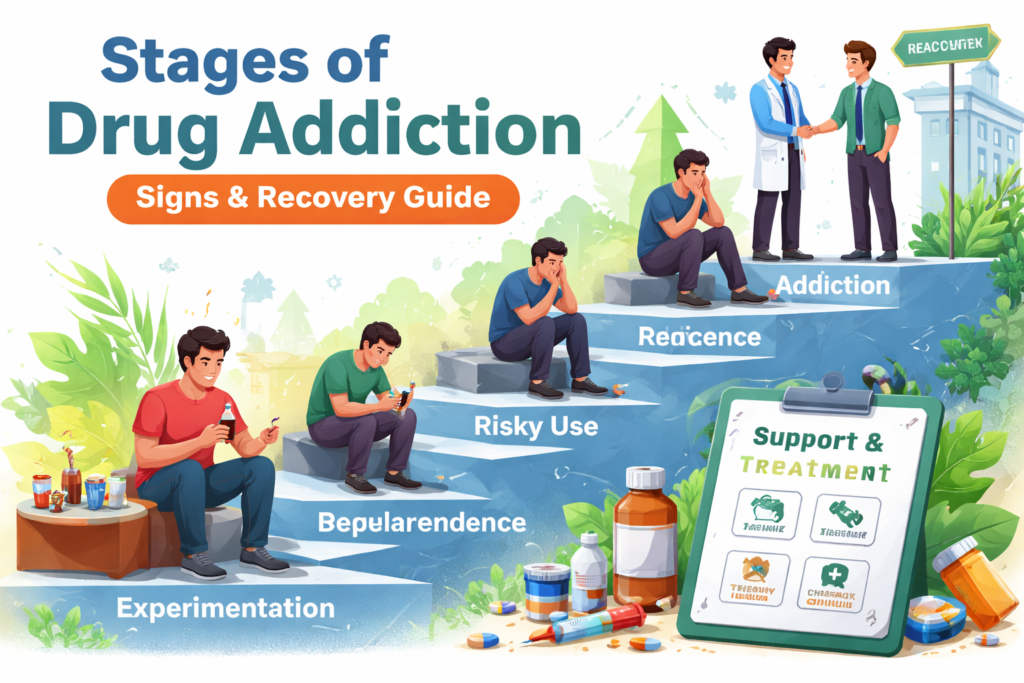
What Are the Stages of Drug Addiction?
Understanding the stages of drug addiction helps families and individuals recognise dangerous behaviour before the condition becomes severe. Addiction usually develops step by step rather than suddenly.
Stage 1: Experimentation
The first stage begins with curiosity. A person may try drugs because of friends, social pressure, or excitement. Teenagers and young adults are more vulnerable during this phase.
At this stage, the person may believe occasional use is harmless. However, repeated exposure slowly increases interest and dependency.
Signs of experimentation:
- Trying drugs at parties
- Hiding activities from family
- Sudden change in friend circle
- Increased risk-taking behavior
Early intervention during this stage can prevent long-term addiction problems.
Stage 2: Regular Use
During this stage, drug use becomes more frequent. The person may begin using substances weekly or daily. Mood changes and emotional instability become noticeable.
Many people start ignoring studies, work responsibilities, or family relationships. Sleep patterns and eating habits may also change.
Signs of regular use:
- Frequent excuses for drug use
- Loss of interest in hobbies
- Irritability and mood swings
- Poor concentration
This phase often creates emotional distance between family members and the addicted person.
Stage 3: Risky Use
Risky use is one of the dangerous stages of drug addiction. The person continues using drugs despite negative consequences. Physical and mental health problems slowly begin appearing.
The individual may start taking financial risks, borrowing money, or engaging in harmful activities to obtain drugs.
Signs of risky drug use:
- Driving under the influence
- Aggressive behavior
- Financial problems
- Poor hygiene
- Isolation from loved ones
At this point, professional counseling and rehabilitation support become extremely important.
Stage 4: Dependence
Dependence develops when the body starts relying on drugs to function normally. Without drugs, the person experiences withdrawal symptoms such as anxiety, sweating, nausea, or severe cravings.
This stage affects both physical and emotional health. The person may feel trapped and unable to quit alone.
Common withdrawal symptoms:
- Restlessness
- Depression
- Body pain
- Insomnia
- Panic attacks
Family support plays a major role during this difficult stage.
Stage 5: Addiction
Addiction is the final and most serious stage. The person loses control over drug use completely. Drugs become the centre of life, even when relationships, career, and health are suffering.
Long-term addiction can damage the brain, liver, heart, and mental health. Many people also experience severe emotional trauma.
Signs of severe addiction:
- Drug cravings throughout the day
- Failed attempts to quit
- Serious health problems
- Violent or secretive behavior
- Social withdrawal
Professional treatment at a rehabilitation centre becomes necessary for recovery.
What Are the Common Signs of Drug Addiction?
Recognising symptoms early can help prevent severe health complications. Drug addiction affects physical health, emotions, and behaviour.
Physical Signs
Physical symptoms often appear first. Families may notice sudden changes in appearance or daily habits.
Common physical symptoms:
- Weight loss
- Red or watery eyes
- Frequent illness
- Poor sleep
- Low energy levels
Emotional Signs
Drug abuse affects mental health deeply. Emotional instability becomes common during addiction.
Emotional symptoms include:
- Anxiety
- Depression
- Anger issues
- Mood swings
- Lack of motivation
Many addicted individuals struggle silently with emotional pain and isolation.
Behavioral Signs
Behaviour changes are also common during addiction. The person may become secretive and avoid social interaction.
Behavioural warning signs:
- Lying frequently
- Missing work or school
- Stealing money
- Avoiding family members
- Loss of responsibility
These signs should never be ignored by parents or loved ones.
How Drug Addiction Affects Life
Drug addiction affects every part of life. The damage is not limited to physical health alone. Families, careers, and emotional relationships also suffer badly.
Mental Health Problems
Long-term drug use increases the risk of depression, anxiety disorders, and suicidal thoughts. Many addicted individuals lose emotional stability over time.
Family Conflicts
Addiction creates stress inside families. Arguments, trust issues, and emotional pain become common. Children are often deeply affected when parents struggle with substance abuse.
Career and Financial Damage
Many addicted individuals lose jobs because of poor performance and irregular attendance. Financial instability grows as drug expenses increase.
Social Isolation
Addiction slowly disconnects people from healthy relationships. Friends and family members may stop communicating because of repeated conflicts or harmful behaviour.
What Treatment Options Are Available?
The good news is that recovery is possible with proper support and treatment. Many people successfully rebuild their lives after addiction treatment.
Detoxification
Detox is the first step in treatment. Doctors help remove harmful substances from the body safely. Medical supervision is important during withdrawal symptoms.
Counseling and Therapy
Counseling helps individuals understand emotional triggers and unhealthy behaviour patterns. Therapy also improves emotional strength and confidence.
Behavioural Treatment
Behavioural therapy teaches healthier coping methods. Patients learn how to manage stress, cravings, and emotional challenges without substance use.
Family Support Programs
Family counseling improves communication and emotional healing. Loved ones also learn how to support recovery without enabling addiction.
Rehabilitation Programs
Professional rehabilitation centres provide structured recovery programs. Facilities like Parivartan Nasha Mukti Kendra offer therapy, medical support, counseling, and long-term recovery guidance.
How Families Can Help During Recovery
Family support can make recovery easier and more successful. Emotional encouragement helps addicted individuals feel less isolated and more motivated.
Helpful ways families can support recovery:
- Listen without judgment
- Encourage professional treatment
- Avoid blaming language
- Celebrate small progress
- Stay patient during setbacks
Recovery is a long journey. Compassion and understanding can improve treatment outcomes significantly.
Why Drug Addiction Awareness Is Important
Drug addiction awareness helps communities understand the dangers of substance abuse. Education reduces stigma and encourages early treatment.
Schools, colleges, and workplaces should openly discuss mental health and addiction prevention. Awareness campaigns can save young people from harmful choices.
Benefits of awareness programs:
- Early identification of addiction
- Better mental health education
- Reduced social stigma
- Increased treatment support
- Stronger community safety
Prevention is always better than long-term treatment.
When Should You Seek Professional Help?
Many families delay treatment because they hope the person will quit naturally. Unfortunately, addiction often becomes worse without professional support.
Seek help immediately if:
- Drug use becomes daily
- Withdrawal symptoms appear
- Violent behaviour increases
- Mental health worsens
- The person cannot stop using drugs
Early treatment improves recovery chances and reduces health complications.
How Recovery Changes Lives
Recovery gives people a second chance to rebuild relationships, careers, and emotional health. Many former addicts become emotionally stronger after rehabilitation.
Professional support, healthy routines, counseling, and family encouragement help individuals stay drug-free for the long term.
At Parivartan Nasha Mukti Kendra, trained professionals guide patients through every stage of recovery with personalized care and emotional support.
Benefits of Early Addiction Treatment
Seeking treatment early offers several important benefits. Quick action can prevent severe physical and emotional damage.
Benefits include:
- Faster recovery process
- Better mental health
- Improved family relationships
- Reduced financial stress
- Lower relapse risk
Timely rehabilitation can completely transform a person’s future.
Conclusion
Understanding the stages of drug addiction is important for early prevention and recovery. Addiction usually begins with experimentation but can quickly turn into dependence and severe health problems.
Families should watch for warning signs and encourage professional support as early as possible. Recovery may take time, but proper treatment, emotional support, and counseling can help individuals live healthy and meaningful lives again.
Drug addiction awareness is not only about treatment. It is also about prevention, education, and building a supportive environment for people struggling with substance abuse.
Frequently Asked Questions (FAQ)
What are the stages of drug addiction?
The stages include experimentation, regular use, risky use, dependence, and addiction. Each stage increases physical and emotional dependency on drugs.
What is drug addiction meaning in Hindi?
Drug addiction, meaning in Hindi is “नशे की लत,” where a person becomes mentally and physically dependent on harmful substances.
What are the early signs of drug addiction?
Early signs include mood swings, secrecy, poor concentration, sleep problems, and sudden behavioural changes.
Why is drug addiction increasing in India?
Stress, peer pressure, unemployment, mental health issues, and easy access to substances are major reasons behind the growing drug addiction in India.
Can drug addiction be treated successfully?
Yes. With detox, counseling, rehabilitation, and family support, many people recover successfully from addiction.
Why is drug addiction awareness important?
Awareness helps people understand risks, identify symptoms early, reduce stigma, and encourage timely treatment.