Recovery begins with the first conversation. Contact Parivartan Nasha Mukti Kendra today for a confidential assessment. Our experienced team is available 24/7 to guide you toward a healthier, addiction-free life.
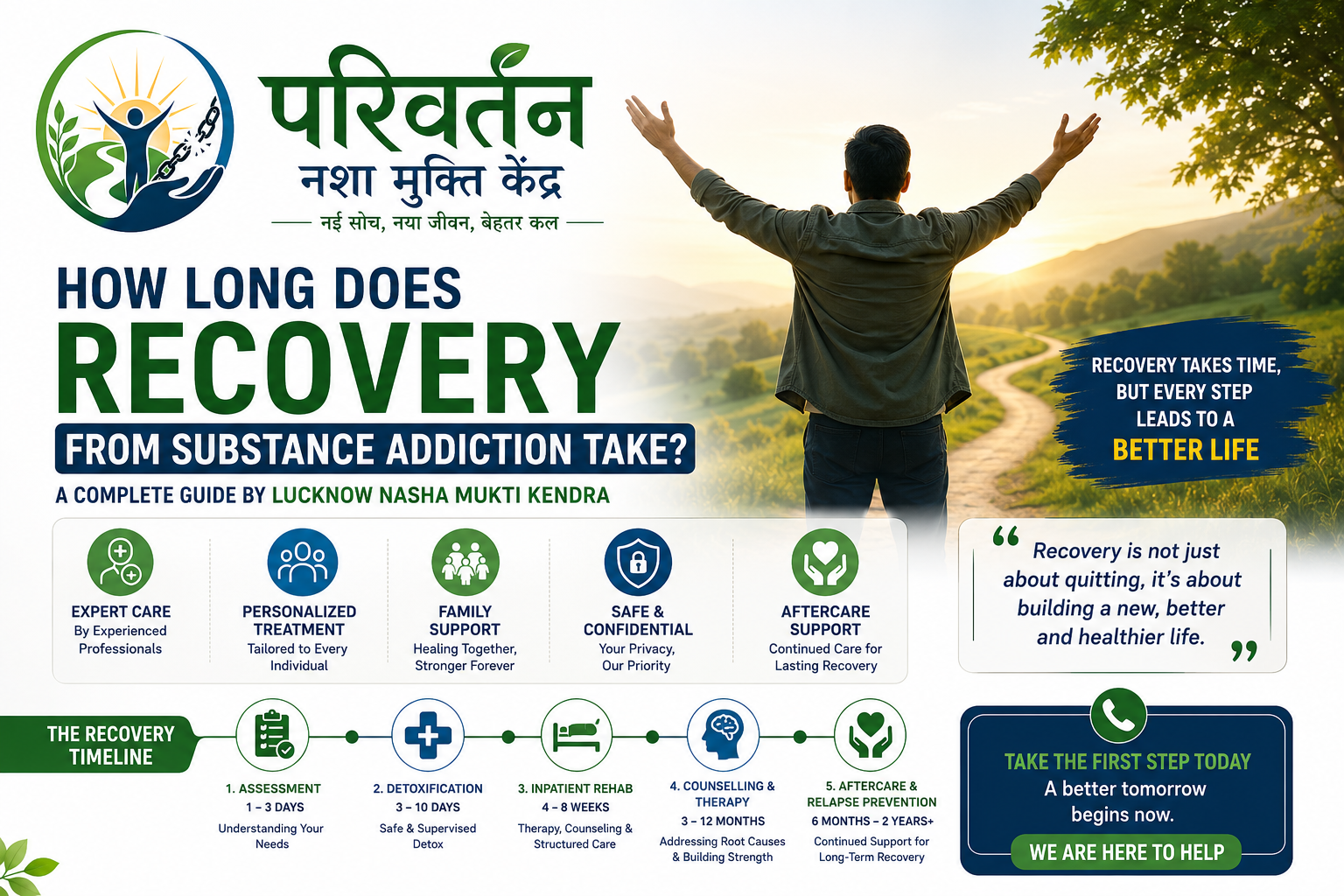
We understand that need completely. But here is the honest answer first: there is no single fixed timeline for addiction recovery. Detox usually takes anywhere from 3 to 10 days. Inpatient rehabilitation typically runs from 4 to 8 weeks. Full recovery, including counselling and relapse prevention, often continues for 6 months to 2 years, sometimes longer.
That might feel unsatisfying if you were hoping for a simple answer. But at Parivartan Nasha Mukti Kendra in Lucknow, we have seen that honesty at the start builds trust for the whole recovery journey. In this guide, we will walk you through exactly what happens at each stage, how long each part usually takes, and what actually decides whether someone recovers faster or slower.
Quick Answer: Average Recovery Timeline at a Glance
Here is a simple breakdown you can refer back to:
Treatment Stage | Average Time |
| Assessment | 1–3 Days |
| Medical Detox | 3–10 Days |
| Rehabilitation | 4–8 Weeks |
| Counselling | 3–12 Months |
| Aftercare | 6–24 Months |
These numbers vary from person to person. The substance involved, how long the addiction has lasted, and the patient’s overall health all change this timeline. Think of these figures as a starting map, not a fixed promise.
Why There’s No Single Fixed Timeline for Addiction Recovery
People often ask us why one patient recovers in three months while another needs a year or more. The answer usually comes down to four factors.
Type and severity of the substance used. Alcohol, opioids, and stimulants affect the body and brain differently. Someone recovering from heavy alcohol dependence may need a longer detox than someone dealing with a milder substance use pattern.
Duration of addiction before treatment began. A person who sought help within the first year of substance use generally recovers faster than someone who has struggled for a decade. The body and mind take longer to heal from prolonged exposure.
Presence of co-existing mental health conditions. Addiction rarely travels alone. Anxiety, depression, or trauma often sit underneath substance use. Treating both together takes more time, but it also leads to more lasting recovery.
Family and social support system. Patients with an involved, understanding family tend to complete treatment faster and relapse less often. This is one reason we involve families directly in the recovery process at our center.
The 5 Stages of Addiction Recovery and How Long Each One Takes
Recovery is not one single event. It happens in stages, and each stage has its own rhythm.
Stage 1: Assessment and Evaluation (Day 1–3)
Every patient starts here. Our doctors and counselors evaluate physical health, mental health history, substance use pattern, and family background. This stage decides the entire treatment plan, so we do not rush it.
Stage 2: Detoxification (Day 3–10)
This is where the body clears itself of the substance under medical supervision. Withdrawal symptoms can range from mild discomfort to serious medical risk, depending on the substance. This is why supervised detox matters so much. Doing this without medical support at home can be dangerous.
Stage 3: Inpatient Rehabilitation (Week 2–8)
Once detox is complete, patients move into structured rehabilitation. This includes therapy sessions, group counselling, daily routine building, and physical wellness activities. Most patients spend 4 to 8 weeks in this stage, though some conditions call for longer stays.
Stage 4: Counselling and Behavioural Therapy (Ongoing)
Recovery is not just physical. This stage focuses on the “why” behind the addiction. Cognitive behavioural therapy, family counselling, and relapse-trigger identification happen here. This continues well after inpatient treatment ends, often for several months.
Stage 5: Aftercare and Relapse Prevention (6 months–2 years)
This is the longest stage, and honestly, the most important one. Aftercare includes regular follow-ups, support group participation, and continued family involvement. Many people think recovery ends when rehab ends. It does not. This final stage is what makes recovery last.
How Long Does Detox Take Before Rehab Starts?
Detox timelines depend heavily on the substance involved.
| Substance | Typical Withdrawal Duration |
| Alcohol | 5 to 10 days, with acute symptoms peaking around day 2-3 |
| Opioids | 4 to 10 days, though cravings can persist longer |
| Sedatives | 7 to 14 days, requires careful medical tapering |
| Stimulants | 3 to 7 days for acute symptoms |
These are general ranges. Every patient’s body responds differently, which is why detox at Parivartan Nasha Mukti Kendra always happens under direct medical supervision, never on a fixed calendar.
Is 30 Days Enough for De-Addiction Treatment?
This is one of the most common questions families ask us, largely because of how popular “30-day rehab” programs are in movies and general conversation.
The honest answer: 30 days is often not enough for lasting recovery, though it can be a strong start.
A 30-day program can successfully complete detox and begin behavioural therapy. What it usually cannot do is address deep-rooted triggers, rebuild family relationships, and prevent relapse long-term. Recovery research consistently shows that longer engagement in treatment, including structured aftercare, leads to significantly better outcomes than short programs alone.
This does not mean longer is always better for every single case. It means the timeline should match the person, not a fixed number of days.
Inpatient vs Outpatient Treatment – Which Takes Longer?
Inpatient treatment usually takes less overall time to complete because the patient is fully immersed in a structured, substance-free environment. Most inpatient programs run 4 to 8 weeks.
Outpatient treatment stretches over a longer calendar period, often 3 to 12 months, because sessions happen a few times a week while the patient continues daily life at home.
When inpatient treatment is recommended
Inpatient care works best for moderate to severe addiction, cases with medical withdrawal risk, or situations where the home environment could trigger relapse.
When outpatient care works well
Outpatient treatment suits patients with strong family support, mild to moderate addiction, and stable daily routines. It also works well as a step-down after inpatient care ends.
Factors That Can Speed Up or Slow Down Recovery
Early intervention vs delayed treatment. The sooner someone starts treatment after addiction begins, the shorter and smoother the recovery journey tends to be.
Family involvement in recovery. Patients whose families attend counselling sessions and stay engaged during treatment show noticeably better and faster progress.
Relapse and its effect on timeline. Relapse is common and does not mean failure. But it does extend the overall recovery timeline, which is exactly why aftercare and relapse prevention planning matter so much.
What Happens After the Rehab Program Ends?
This is the part most people do not think about until they are already there. Rehab is the beginning of recovery, not the end of it.
Aftercare programs at Parivartan Nasha Mukti Kendra
We stay connected with patients well after they leave our facility. This includes scheduled follow-up sessions, family check-ins, and support group access. Recovery works better as a continued relationship, not a one-time program.
Why relapse prevention is a lifelong process, not a phase
Addiction recovery shares something with managing any long-term health condition. It needs ongoing attention. We help patients build the tools to recognise triggers and manage cravings long after they walk out of our doors.
Why Choose Parivartan Nasha Mukti Kendra in Lucknow
We treat every patient’s timeline as unique, because it genuinely is. Our team includes qualified doctors, psychiatrists, and counsellors who design a personalised recovery plan based on assessment, not assumption.
Our facility in Lucknow serves patients from across Uttar Pradesh, offering both inpatient and outpatient programs, medically supervised detox, and structured aftercare support. We focus on building trust with both patients and families from the very first conversation.
Frequently Asked Questions
How long does it take to fully recover from addiction? Full recovery timelines vary widely, but most patients need 6 months to 2 years of combined treatment and aftercare to build lasting, stable recovery.
What is the first step in de-addiction treatment? Treatment begins with a medical and psychological assessment to understand the substance used, its severity, and any underlying mental health concerns.
How long does alcohol de-addiction take in India? Alcohol detox typically takes 5 to 10 days, followed by 4 to 8 weeks of rehabilitation and several months of continued counselling.
Can someone recover from addiction without going to rehab? Mild cases with strong family support may manage through outpatient counselling alone, but moderate to severe addiction generally needs supervised inpatient care.
What happens if a patient relapses during treatment? Relapse extends the treatment timeline but is a common part of many recovery journeys. Our team adjusts the treatment plan and continues support without judgment.
Does Parivartan Nasha Mukti Kendra offer aftercare support? Yes. We provide structured follow-up sessions, family counselling, and support group access well after formal treatment ends.
Is de-addiction treatment confidential? Yes, patient confidentiality is maintained throughout the assessment, treatment, and aftercare process.
How much does de-addiction treatment cost in Lucknow? Costs vary based on program type and duration. Contact our team directly for a personalised consultation and cost breakdown.
Key Takeaways
There is no single fixed timeline for addiction recovery; it depends on the individual.
Detox typically takes a few days to two weeks, while full rehabilitation and aftercare can extend from several months to a couple of years.
Aftercare is an ongoing process, not a fixed finish line.
Early treatment and strong family involvement usually lead to faster, more stable recovery.
Parivartan Nasha Mukti Kendra builds a personalised recovery timeline for every patient who walks through our doors.
Get Help Today – Talk to Our Addiction Recovery Team
If you or someone you love is struggling with substance addiction, you do not have to figure this out alone. Reach out to Parivartan Nasha Mukti Kendra in Lucknow for a confidential consultation, and let our team help you understand what recovery could look like for your specific situation.