
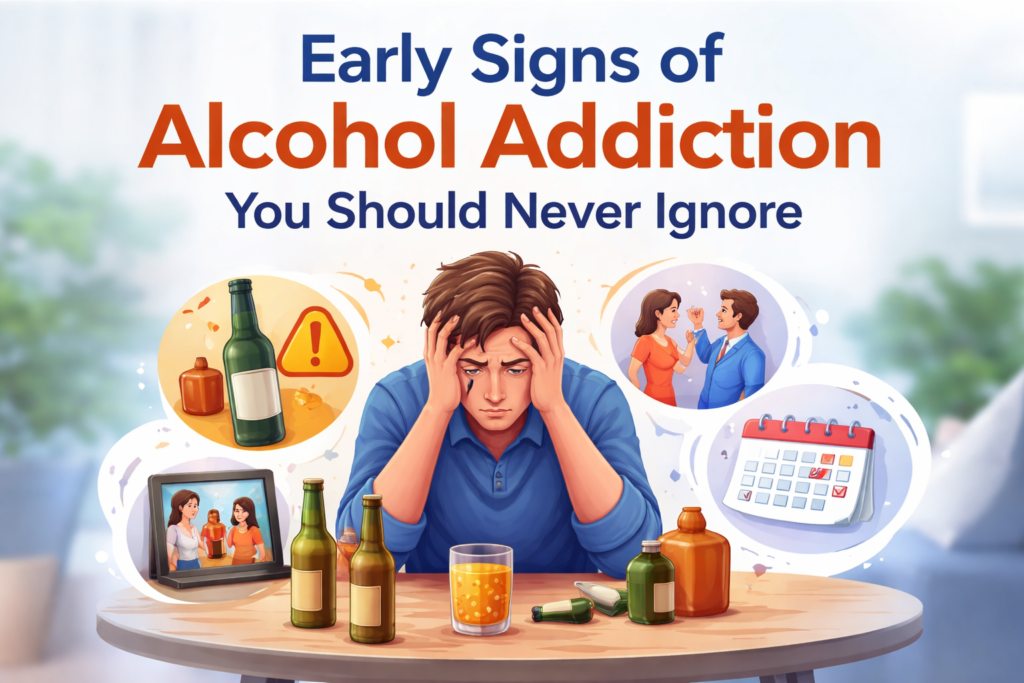
Alcohol addiction often begins slowly. Many people do not notice the problem during the early stage. Social drinking may look harmless at first, but repeated alcohol use can slowly become dependency.
Many families ignore the early alcohol addiction signs because they believe the person can stop anytime. Sadly, addiction becomes harder to control over time. Early identification can protect mental health, relationships, and physical well-being.
According to the World Health Organization, harmful alcohol use causes nearly 3 million deaths every year worldwide. Alcohol abuse also increases anxiety, depression, liver disease, and emotional instability.
Parivartan Nasha Mukti Kendra provides professional addiction treatment and mental health support for people struggling with alcohol dependency. Early treatment improves recovery success and helps people rebuild their lives.
What is Alcohol Addiction?
Alcohol addiction is a condition where a person becomes physically and emotionally dependent on alcohol. The body and mind start craving alcohol regularly.
Casual drinking and alcohol dependency are different. A casual drinker can stop drinking easily. A person with addiction struggles to control alcohol use even when it creates serious problems.
Alcohol affects both physical and emotional health over time. Excessive alcohol use can damage the liver, heart, brain, and nervous system. It also affects mood, behavior, and relationships.
Common effects of alcohol dependency include:
- Poor emotional control
- Anxiety and depression
- Weak concentration
- Sleep disturbances
- Social isolation
Ignoring alcohol abuse symptoms during the early stage increases the risk of severe addiction later.
Common Early Signs of Alcohol Addiction
Recognizing the warning signs early can prevent long-term damage. Many symptoms appear slowly and become stronger with time.
Increased Craving for Alcohol
One of the earliest alcohol addiction signs is frequent craving. A person may constantly think about alcohol during work, social gatherings, or family time.
They may feel uncomfortable without drinking. Many people begin using alcohol to relax, reduce stress, or feel confident socially.
Common signs include:
- Daily urge to drink
- Drinking after work regularly
- Feeling restless without alcohol
- Depending on alcohol during social events
These habits often indicate growing alcohol dependency.
Loss of Control Over Drinking
People with addiction often drink more than planned. They may promise themselves to stop after one drink but continue drinking heavily.
Loss of control is one of the strongest warning signs of alcohol dependence.
Symptoms include:
- Drinking larger amounts frequently
- Failed attempts to quit
- Difficulty limiting alcohol intake
- Drinking despite health problems
Repeated loss of control usually means professional addiction treatment is necessary.
Hiding Drinking Habits
Many people hide alcohol use from family and friends. Secretive behavior often develops because of guilt or fear of judgment.
Warning signs include:
- Hiding alcohol bottles
- Drinking alone secretly
- Lying about alcohol consumption
- Avoiding conversations about drinking
Hiding drinking habits damages trust and creates emotional distance within families.
Mood Swings and Irritability
Alcohol changes brain chemistry. Over time, it affects emotional stability and mental health.
A person may become angry, anxious, or depressed when they cannot drink. Emotional changes often become noticeable before physical symptoms appear.
Common emotional signs include:
- Sudden anger
- Anxiety
- Irritability
- Depression
- Emotional instability
Mental health support becomes important during this stage of addiction recovery.
Neglecting Responsibilities
Alcohol addiction often affects daily responsibilities. A person may lose interest in work, family duties, or personal care.
Common behavioral changes include:
- Poor work performance
- Missing deadlines
- Ignoring family responsibilities
- Poor hygiene
- Lack of motivation
These unhealthy drinking habits can affect career growth and personal relationships.
Physical Alcohol Abuse Symptoms
The body usually gives early warning signals before addiction becomes severe. Many people ignore these symptoms for months or years.
Physical alcohol abuse symptoms include:
- Frequent headaches
- Poor sleep quality
- Fatigue
- Sweating
- Trembling hands
- Red eyes
- Nausea
Withdrawal symptoms may appear when the person stops drinking suddenly. Severe withdrawal should always be treated under medical supervision.
Emotional and Mental Health Changes Caused by Alcohol Abuse
Alcohol addiction affects emotional health deeply. Many people drink alcohol to escape stress, sadness, or emotional pain. Over time, alcohol makes these problems worse.
Anxiety and Depression
Heavy drinking increases anxiety and depression. Alcohol temporarily changes mood, but long-term use weakens emotional stability.
People struggling with addiction often experience:
- Panic attacks
- Low confidence
- Sadness
- Stress
- Emotional exhaustion
Professional counseling support helps patients manage these emotional health issues during recovery.
Isolation from Family and Friends
People with alcohol dependency often isolate themselves. They may avoid family gatherings or spend more time alone.
Isolation usually increases emotional stress and worsens addiction. Strong family support can improve motivation during substance abuse recovery.
Reduced Confidence and Motivation
Alcohol abuse affects confidence and decision-making ability. Many people lose motivation to work toward personal goals.
Simple daily tasks may feel difficult. Emotional healing and mental health support help patients regain confidence gradually.
Parivartan Nasha Mukti Kendra provides counseling programs designed to support emotional recovery and relapse prevention.
Social Signs That Should Never Be Ignored
Alcohol addiction affects social life and relationships. The impact often becomes visible in family behavior, financial health, and communication patterns.
Relationship Conflicts
Frequent drinking can increase arguments at home. Trust issues and emotional distance become common.
Families may experience:
- Communication problems
- Emotional stress
- Aggressive behavior
- Reduced trust
- Parenting difficulties
Supportive family counseling can improve understanding during recovery.
Financial Problems
Alcohol addiction often creates financial pressure. Excessive spending on alcohol can affect savings and household stability.
Work productivity may also decrease because of poor concentration and fatigue.
Risky Behavior
Alcohol reduces decision-making ability. People under the influence may take unnecessary risks that affect personal safety.
Examples include:
- Drunk driving
- Aggressive arguments
- Unsafe social behavior
- Legal problems
These situations can damage both personal and professional life.
When Should You Seek Professional Help?
Many people delay treatment because they believe addiction is temporary. However, alcohol dependency usually becomes stronger without proper care.
You should seek help if:
- Drinking affects daily responsibilities
- Withdrawal symptoms appear
- Mental health worsens
- Family conflicts increase
- Attempts to quit repeatedly fail
Early addiction treatment improves recovery success and reduces long-term health complications.
Parivartan Nasha Mukti Kendra offers personalized recovery programs, detox support, counseling, and rehabilitation services for alcohol addiction recovery.
How an Alcohol Rehab Center Helps in Recovery
An alcohol rehab center provides structured treatment and professional care. Recovery becomes safer and more effective with medical supervision.
Medical Support
Detoxification removes alcohol from the body safely. Medical professionals monitor withdrawal symptoms carefully during recovery.
Benefits include:
- Safe detox process
- Health monitoring
- Reduced withdrawal risks
- Better physical recovery
Medical supervision improves patient safety during the early recovery stage.
Counseling and Therapy
Counseling helps patients understand emotional triggers behind alcohol abuse.
Therapy options may include:
- One-on-one counseling
- Group therapy
- Behavioral therapy
- Family therapy
These programs help patients develop healthier coping habits.
Mental Health Support
Mental health support is essential during addiction recovery. Emotional healing reduces relapse risk and improves confidence.
Patients learn:
- Stress management techniques
- Emotional control
- Healthy communication skills
- Relapse prevention methods
Long-term emotional recovery improves overall quality of life.
Family Support Programs
Addiction affects the entire family. Family counseling helps loved ones understand addiction and recovery better.
Support programs focus on:
- Communication improvement
- Emotional healing
- Building trust
- Healthy support systems
Family involvement often improves recovery outcomes significantly.
Tips to Prevent Alcohol Addiction
Healthy habits can reduce the risk of alcohol dependency. Early prevention protects both mental and physical health.
Prevention Tips
- Avoid peer pressure
- Manage stress naturally
- Exercise regularly
- Sleep properly
- Seek emotional support early
- Spend time with supportive people
- Talk openly about mental health
Positive routines help people avoid unhealthy drinking habits.
Why Early Treatment Improves Recovery Success
Early treatment gives the body and mind more time to heal. Recovery becomes easier before addiction reaches a severe stage.
Faster Physical Recovery
The body heals more effectively during early recovery. Health complications may also improve with proper rehabilitation care.
Better Emotional Stability
Counseling and therapy help patients manage anxiety, depression, and emotional stress more effectively.
Stronger Family Relationships
Recovery programs improve communication between patients and family members. Emotional trust slowly returns with time and support.
Lower Risk of Severe Health Problems
Timely addiction treatment reduces the risk of:
- Liver disease
- Heart problems
- Brain damage
- Severe depression
Professional rehabilitation programs improve long-term health outcomes.
Conclusion
Alcohol addiction usually starts with small changes that people ignore. Cravings, emotional instability, secrecy, and withdrawal symptoms are important warning signs that should never be overlooked.
Recognizing alcohol addiction signs early can prevent serious emotional, social, and physical damage. Timely addiction treatment improves recovery success and protects mental health.
Parivartan Nasha Mukti Kendra provides professional rehabilitation, counseling support, detox care, and long-term recovery guidance for individuals struggling with alcohol dependency.
Recovery is possible with proper support, family encouragement, and early action.
Frequently Asked Questions (FAQ)
What are the first signs of alcohol addiction?
Early signs include cravings, mood swings, hiding drinking habits, loss of control over drinking, and withdrawal symptoms.
How do I know if someone is addicted to alcohol?
Frequent drinking, emotional instability, neglecting responsibilities, and secret drinking behavior are common signs of addiction.
Can alcohol addiction affect mental health?
Yes. Alcohol addiction can increase anxiety, depression, emotional stress, and social isolation over time.
When should someone visit an alcohol rehab center?
Professional help is recommended when alcohol use affects health, relationships, work performance, or emotional stability.
Can alcohol addiction be treated successfully?
Yes. Proper addiction treatment, counseling, detox support, and mental health support can help individuals recover successfully.
How does Parivartan Nasha Mukti Kendra help alcohol addicts?
Parivartan Nasha Mukti Kendra provides detox care, counseling, rehabilitation programs, relapse prevention strategies, and emotional support for long-term recovery.