Ritu noticed something was off about her brother months before she said anything. He stopped joining family dinners. He borrowed money more often. His eyes looked tired all the time, even after he claimed to have slept well. She told herself it was just stress from his new job. It wasn’t.
Many families go through this exact pattern. They see the signs, but they explain them away because facing the truth feels too heavy. If you are reading this because someone you love has been acting differently, or because you’ve been asking hard questions about your own habits, this blog is for you.
We’ll walk through the ten warning signs that often point to drug addiction and what to do next if you recognize them. If you’re in Lucknow and looking for support, Parivartan Nasha Mukti Kendra is here to help, quietly and without judgement.
What Is Drug Addiction? A Simple Explanation
Quick answer: Drug addiction is a medical condition where a person becomes dependent on a substance, both physically and mentally. It changes how the brain responds to reward and stress, making it hard for the person to stop on their own, even when they want to.
How Addiction Affects the Brain and Behaviour
Drugs interfere with the brain’s natural reward system. Over time, the brain starts to need the substance just to feel normal. This is why addiction isn’t simply a matter of willpower. It’s a medical condition that needs medical and psychological treatment, much like diabetes or hypertension needs ongoing care.
Why Early Recognition Matters
The earlier a family notices the signs, the easier the recovery journey becomes. Addiction rarely stays the same. It grows quietly, and it often takes over more parts of a person’s life before anyone steps in.
The Cost of Ignoring the Signs
When warning signs go unaddressed, the person’s health, relationships, and career usually suffer first. Left untreated, addiction can lead to serious medical complications, job loss, legal trouble, or family breakdown. None of this happens overnight, but it happens faster than most people expect.
How Family Members Often Miss the Signs
Families often mistake early symptoms for stress, tiredness, or a “difficult phase.” This isn’t a failure on their part. Addiction is designed, in a sense, to hide itself. The person struggling often becomes skilled at covering it up, and loved ones want to believe the best.
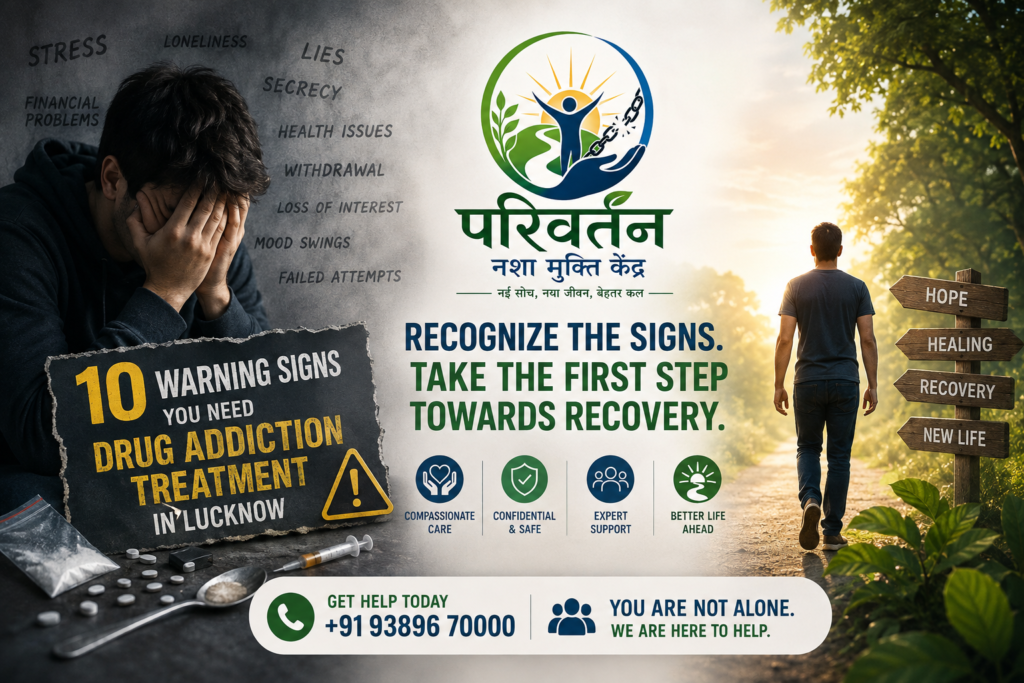
10 Warning Signs You Need Drug Addiction Treatment in Lucknow
1. Sudden Changes in Behaviour or Mood
One of the earliest signs is a noticeable shift in personality. Someone who was calm might become irritable or aggressive. Someone talkative might turn quiet and withdrawn. These mood swings often happen without any clear reason, and they tend to repeat in a pattern.
2. Withdrawal from Family and Friends
People struggling with addiction often pull away from the people closest to them. They skip family functions, stop replying to friends, and prefer spending time alone or with a new group of people they’re secretive about.
3. Neglecting Responsibilities at Work or Home
Missed deadlines, frequent absences, or a sudden drop in performance at work or college can be a red flag. At home, this might look like ignoring chores, forgetting important dates, or letting personal hygiene slip.
4. Physical Signs Like Weight Loss or Bloodshot Eyes
Physical changes are often the clearest sign. Watch for sudden weight loss, bloodshot or glazed eyes, unusual body odour, shaky hands, or a change in sleep patterns. These signs vary depending on the substance, but they rarely appear without reason.
5. Financial Problems or Frequent Borrowing
Addiction is expensive to sustain. If someone starts borrowing money often, selling personal items, or becomes unusually secretive about their spending, it’s worth paying attention to.
6. Increased Secrecy and Lying
A person struggling with addiction often builds a wall of secrecy around their habits. This shows up as locked doors, hidden phones, vague answers about where they’ve been, and small lies that don’t quite add up.
7. Loss of Interest in Hobbies
Activities that once brought joy, sports, music, reading, spending time with friends, start to feel unimportant. This loss of interest is one of the quieter signs, but it’s one of the most telling.
8. Withdrawal Symptoms When Not Using
If someone becomes anxious, shaky, sweaty, or unwell when they haven’t used the substance for a while, this points to physical dependence. Withdrawal symptoms are one of the strongest indicators that professional help is needed.
9. Failed Attempts to Quit on Their Own
Many people try to stop using on their own before reaching out for help. Repeated attempts that don’t succeed, especially with visible frustration or shame afterward, are a sign that self-help alone isn’t enough anymore.
10. Health Problems That Keep Coming Back
Frequent illnesses, unexplained injuries, or ongoing health complaints that don’t improve can be linked to substance use. The body often shows the strain long before the person admits there’s a problem.
When These Signs Point to a Medical Emergency
If someone shows signs of an overdose, such as extreme confusion, difficulty breathing, unconsciousness, or seizures, treat it as a medical emergency. Call for emergency medical help immediately rather than waiting.
What to Do If You Notice These Signs
Recognising the signs is only the first step. What you do next matters just as much.
How to Start the Conversation with a Loved One
Choose a calm moment, not during an argument or right after an incident. Speak from concern, not accusation. Something as simple as, “I’ve noticed you haven’t seemed like yourself lately, and I’m worried,” opens the door without putting the person on the defensive.
When to Seek Professional Help Immediately
If you notice withdrawal symptoms, repeated failed attempts to quit, or any signs of a medical emergency, don’t wait for the “right moment.” Reach out to a de-addiction professional as soon as possible.
How Drug Addiction Treatment Works in Lucknow
Treatment isn’t a single event. It’s a structured process, usually built around four stages.
Detox: The First Step
Detox helps the body safely clear the substance under medical supervision. This step manages withdrawal symptoms and prepares the person for the next stages of treatment.
Counselling and Therapy
Individual and group counselling help address the reasons behind the addiction, whether it’s stress, trauma, peer pressure, or an underlying mental health condition. This is often the most important part of long-term recovery.
Family Involvement in Recovery
Recovery works better when families are involved. Family counselling sessions help loved ones understand addiction, rebuild trust, and support the person through the ups and downs of recovery.
Aftercare and Relapse Prevention
Treatment doesn’t end when the person leaves the centre. Ongoing follow-ups, support groups, and relapse prevention plans help maintain recovery over the long run.
Why Choose Parivartan Nasha Mukti Kendra in Lucknow
Our Approach to De-Addiction Treatment
At Parivartan Nasha Mukti Kendra, treatment is built around the individual, not a one-size-fits-all programme. Each patient’s plan considers their substance history, physical health, and personal circumstances.
Trained Staff and Confidential Care
Our team includes trained counsellors and medical professionals who understand both the medical and emotional sides of addiction. Every conversation and treatment record stays confidential.
Success Stories and Patient Trust
Over the years, many families in Lucknow have trusted us to guide their loved ones through recovery. We focus on steady, honest progress rather than quick promises.
Frequently Asked Questions
How do I know if someone needs rehab?
If you notice several of the signs above, especially withdrawal symptoms, secrecy, or failed attempts to quit, it’s a strong indication that professional treatment is needed.
Is drug addiction treatment confidential in Lucknow?
Yes. Reputable de-addiction centers, including Parivartan Nasha Mukti Kendra, keep all patient information strictly confidential.
How long does de-addiction treatment take?
This depends on the substance, the severity of dependence, and the individual’s response to treatment. Programmes can range from a few weeks to several months.
Can addiction be treated without hospitalisation?
In some cases, outpatient treatment works well, especially for milder dependence. A professional assessment will determine the right approach.
What is the first step to get treatment?
The first step is usually a confidential consultation, where a professional assesses the situation and recommends a suitable treatment plan.