Introduction
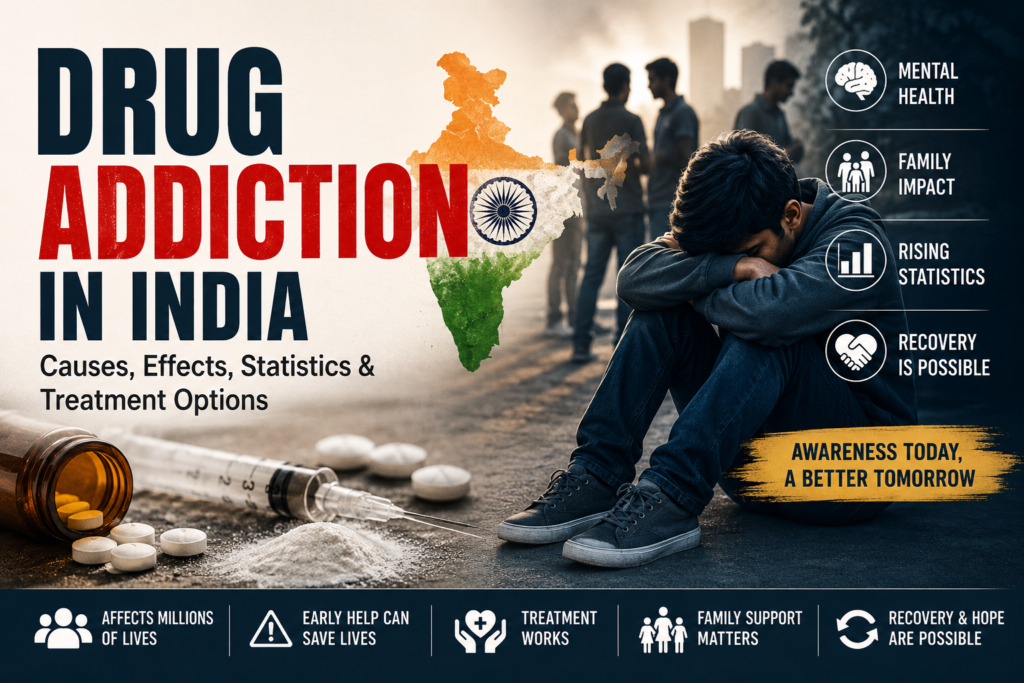
Drug addiction in India has become a major public health concern. It affects people of all age groups, including teenagers, young adults, and even children. The growing availability of illegal drugs, peer pressure, stress, and changing lifestyles have increased the number of people struggling with substance abuse.
Drug addiction does not only affect the person using drugs. It also impacts families, workplaces, schools, and society as a whole. Many people lose their health, relationships, education, and careers because of addiction.
The good news is that recovery is possible with the right support and treatment. Early intervention, professional rehabilitation, and family involvement can help individuals overcome addiction and rebuild their lives.
This article explains drug addiction in India, its causes, symptoms, effects, current trends, and available treatment options.
What Is Drug Addiction?
Drug addiction is a chronic condition in which a person becomes physically or psychologically dependent on drugs. Over time, the brain adapts to the substance, making it difficult to stop using it without professional help.
A person with drug addiction continues using drugs despite knowing the harmful consequences. The addiction gradually affects their physical health, mental well-being, relationships, and financial stability.
Drug addiction can involve illegal substances, prescription medicines, or other addictive chemicals.
Drug Addiction in India: Current Situation
India has witnessed a steady rise in substance abuse over the past decade. Urban and rural areas both face increasing challenges related to drug consumption.
Young people are particularly vulnerable due to academic pressure, unemployment, social influence, and easy access to addictive substances.
Several border regions and metropolitan cities have reported higher levels of drug trafficking and substance abuse. However, addiction is now spreading across different parts of the country.
Government agencies and healthcare organizations continue to strengthen awareness campaigns, prevention programs, and rehabilitation services to address this growing issue.
Drug Addiction in Indian Youth
Drug addiction among Indian youth has become one of the biggest social concerns.
Many young people start experimenting with drugs out of curiosity or peer pressure. Some turn to substances to cope with stress, anxiety, depression, or family problems.
Common factors include:
- Peer influence
- Academic stress
- Relationship issues
- Social media influence
- Lack of family supervision
- Easy availability of drugs
- Unemployment and frustration
Without timely intervention, occasional use can develop into long-term addiction.
Child Drug Addiction in India
Drug abuse among children and adolescents is an alarming issue.
Some children become exposed to substances through older friends, family environments, or street life. Others misuse inhalants or prescription medicines without understanding the risks.
Early drug use can affect brain development, learning ability, emotional stability, and social behaviour.
Parents, teachers, and healthcare professionals should watch for early warning signs and seek help immediately if they suspect substance abuse.
Common Types of Drugs Used in India
Different substances contribute to drug addiction across India.
Some commonly abused drugs include:
- Cannabis
- Heroin
- Opioids
- Cocaine
- Synthetic drugs
- Prescription painkillers
- Sedatives
- Inhalants
- Methamphetamine
Each substance affects the brain differently, but all carry serious health risks when misused.
What Causes Drug Addiction?
There is no single cause of addiction. It usually develops due to a combination of biological, psychological, and environmental factors.
Peer Pressure
Friends and social groups often influence first-time drug use, especially among teenagers.
Mental Health Issues
People experiencing anxiety, depression, trauma, or emotional stress may use drugs as a coping mechanism.
Family Problems
Lack of emotional support, domestic conflict, or neglect can increase the risk of addiction.
Genetic Factors
Family history may increase susceptibility to substance dependence.
Easy Availability
Illegal drug networks and misuse of prescription medicines make substances more accessible.
Signs and Symptoms of Drug Addiction
Recognising addiction early can improve treatment outcomes.
Common signs include:
- Sudden mood changes
- Isolation from family and friends
- Poor academic or work performance
- Financial problems
- Loss of appetite
- Weight changes
- Poor hygiene
- Sleep disturbances
- Secretive behaviour
- Frequent lying
- Loss of interest in hobbies
Physical symptoms vary depending on the substance being used.
Effects of Drug Addiction
Drug addiction affects every aspect of life.
Physical Effects
- Heart disease
- Liver damage
- Kidney problems
- Respiratory disorders
- Weak immune system
- Increased risk of infections
Mental Effects
- Depression
- Anxiety
- Hallucinations
- Memory loss
- Poor decision-making
- Suicidal thoughts
Social Effects
- Family conflicts
- Divorce
- Job loss
- Academic failure
- Criminal activities
- Social isolation
Drug Addiction Statistics in India
Recent studies and government reports indicate that millions of people in India are affected by substance abuse.
Experts continue to observe increasing cases among adolescents and young adults. Opioid use remains one of the major concerns, while synthetic drugs are becoming more common in several regions.
Although awareness has improved, many people still avoid treatment due to stigma and lack of information.
Using the latest government and healthcare data while updating this article can improve its accuracy and usefulness.
How Drug Addiction Is Diagnosed
Doctors and mental health professionals evaluate addiction through:
- Medical history
- Physical examination
- Psychological assessment
- Behavioural evaluation
- Substance use history
Accurate diagnosis helps create an effective treatment plan.
Treatment Options for Drug Addiction
Recovery is possible with proper medical care and long-term support.
Medical Detoxification
Detox helps remove harmful substances from the body under medical supervision while managing withdrawal symptoms.
Counselling
Individual counselling helps patients understand addiction triggers and develop healthier coping strategies.
Behavioural Therapy
Behavioural therapy focuses on changing harmful thought patterns and improving decision-making.
Family Therapy
Family participation strengthens emotional support and improves recovery outcomes.
Rehabilitation Programmes
Residential and outpatient rehabilitation centres provide structured treatment, counselling, therapy, and relapse prevention strategies.
How Families Can Support Recovery
Family support plays a vital role in successful rehabilitation.
Helpful steps include:
- Encouraging professional treatment
- Avoiding blame and criticism
- Creating a positive home environment
- Participating in counselling sessions
- Monitoring recovery progress
- Promoting healthy routines
Recovery becomes easier when families work together.
Can Drug Addiction Be Prevented?
Many cases can be prevented through awareness and education.
Preventive measures include:
- Drug awareness programmes in schools
- Open communication within families
- Mental health support
- Stress management education
- Community awareness campaigns
- Early intervention for behavioural problems
Prevention reduces the risk of long-term addiction.
When Should You Seek Professional Help?
Professional help should be sought if a person:
- Cannot stop using drugs
- Experiences withdrawal symptoms
- Develops health complications
- Neglects family or work responsibilities
- Becomes aggressive or depressed
- Shows signs of overdose
Early treatment often leads to better recovery outcomes.
Why Professional Rehabilitation Matters
Professional rehabilitation provides medical supervision, therapy, emotional support, and relapse prevention strategies.
Patients receive personalised treatment plans designed to address both addiction and underlying mental health challenges.
A structured rehabilitation programme improves the chances of long-term recovery and helps individuals return to healthy and productive lives.
Key Takeaways
- Drug addiction is a serious health condition that affects millions of people in India.
- Indian youth face increasing risks due to peer pressure, stress, and easy access to drugs.
- Addiction impacts physical health, mental well-being, relationships, and careers.
- Early diagnosis and professional treatment improve recovery success.
- Family support plays a critical role in long-term rehabilitation.
- Awareness, prevention, and timely intervention can reduce the burden of substance abuse in society.
Frequently Asked Questions
What is drug addiction?
Drug addiction is a condition where a person becomes dependent on drugs and finds it difficult to stop using them despite harmful consequences.
Why is drug addiction increasing in India?
Factors such as peer pressure, stress, unemployment, mental health issues, and easy availability of drugs contribute to the growing problem.
Which age group is most affected?
Young adults and teenagers are among the most affected groups, although addiction can occur at any age.
Can drug addiction be cured?
Yes. With medical treatment, counselling, rehabilitation, and family support, many people achieve long-term recovery.
How can parents identify drug addiction?
Behavioural changes, poor academic performance, mood swings, secrecy, financial issues, and social withdrawal may indicate substance abuse.
What are the long-term effects of drug addiction?
Long-term addiction can cause heart disease, liver damage, mental illness, relationship problems, unemployment, and financial difficulties.
Is rehabilitation necessary for recovery?
Professional rehabilitation provides structured treatment and significantly improves the chances of successful recovery and relapse prevention.
How can society help prevent drug addiction?
Awareness campaigns, education, early intervention, mental health support, and community participation can reduce the spread of substance abuse and encourage people to seek timely treatment.