Introduction
Many people believe that every drug or medicine can cause addiction. This is a common misconception. The truth is that not all drugs are addictive. Some medicines are designed to treat illnesses without creating physical or psychological dependence when used correctly.
If you have ever wondered, “Which of the following drug does not cause addiction?”, this guide will help you understand the answer in simple language. It also explains the psychological causes of drug addiction, social causes of drug addiction, and the causes and effects of drug addiction so that you can make informed decisions for yourself and your family.
Understanding addiction is important because early awareness can prevent serious health problems and encourage timely treatment.
What Does Drug Addiction Mean?
Drug addiction is a condition in which a person cannot stop using a substance even when it causes harm to their health, relationships, education, or career.
The brain starts depending on the substance to feel pleasure or function normally. Over time, the person develops cravings and may experience withdrawal symptoms when they stop using it.
Difference Between Drug Use and Drug Addiction
Using a medicine under a doctor’s supervision is very different from addiction.
| Drug Use | Drug Addiction |
| Used for medical treatment | Used compulsively |
| Taken in prescribed dosage | Taken in excessive amounts |
| Stops after recovery | Continues despite harm |
| Doctor monitored | Loss of self-control |
Understanding this difference helps people avoid unnecessary fear about prescribed medicines.
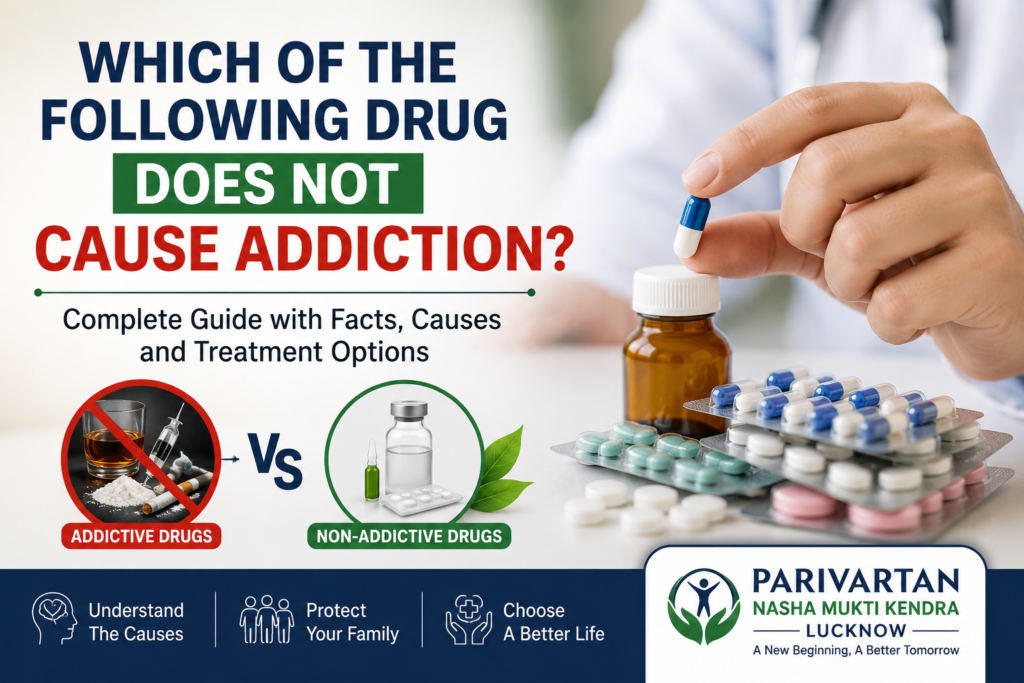
Which of the Following Drug Does Not Cause Addiction?
The simple answer is that many medicines do not cause addiction when used as prescribed.
Examples include:
- Most antibiotics
- Vaccines
- Blood pressure medicines
- Diabetes medicines
- Thyroid medicines
- Many allergy medications
These medicines do not stimulate the brain’s reward system in the same way as addictive substances.
However, every medicine should still be taken according to medical advice. Misusing any medicine can create health risks, even if it is not considered addictive.
Examples of Drugs That Commonly Cause Addiction
Some drugs have a much higher risk of dependence because they affect brain chemistry.
These include:
- Opioid painkillers
- Heroin
- Cocaine
- Methamphetamine
- Nicotine
- Alcohol
- Certain sleeping pills
- Some anti-anxiety medicines
These substances increase dopamine release in the brain, creating feelings of pleasure that encourage repeated use.
Why Do Some Drugs Cause Addiction?
Not every substance affects the brain in the same way.
Addictive drugs activate the brain’s reward centre and create intense pleasure. Repeated exposure changes brain function and increases cravings.
Over time, the body develops tolerance, meaning larger amounts are needed to achieve the same effect.
This cycle can lead to dependence and addiction.
Physical Dependence vs Psychological Dependence
Physical dependence occurs when the body adapts to a substance and experiences withdrawal symptoms without it.
Psychological dependence happens when a person feels emotionally attached to using a substance to cope with stress, sadness, or anxiety.
Many people experience both forms together.
Psychological Causes of Drug Addiction
Mental and emotional factors play a major role in substance abuse.
Stress
Long-term stress can push people toward drugs as a temporary escape from pressure.
Anxiety
People with anxiety disorders may misuse substances to calm themselves without seeking proper treatment.
Depression
Feelings of sadness and hopelessness often increase the risk of addiction when emotional support is missing.
Trauma
Past emotional or physical trauma can leave lasting effects that contribute to substance abuse.
Low Self-Esteem
People who struggle with confidence may use drugs to feel accepted or temporarily better.
Loneliness
Social isolation and lack of emotional connection can increase dependence on addictive substances.
Recognising these psychological causes of drug addiction allows families and professionals to provide support before addiction becomes severe.
Social Causes of Drug Addiction
Social surroundings have a powerful influence on behaviour.
Peer Pressure
Young people may start using drugs to fit into a group or avoid rejection.
Family Environment
Growing up in a home where substance abuse is common increases the likelihood of addiction.
Academic Pressure
Students facing high expectations sometimes misuse substances to handle stress.
Unemployment
Financial struggles and uncertainty may increase emotional distress and substance use.
Social Media Influence
Online content that glorifies drug use can create false beliefs and encourage experimentation.
Easy Availability
When addictive substances are easily accessible, the risk of misuse becomes higher.
Understanding the social causes of drug addiction helps communities create better awareness and prevention programs.
Causes and Effects of Drug Addiction
Drug addiction affects every area of life.
Physical Effects
- Weak immune system
- Heart problems
- Liver damage
- Poor sleep
- Weight changes
- Reduced energy
Mental Health Effects
- Depression
- Anxiety
- Mood swings
- Memory problems
- Poor concentration
Family Impact
Addiction often creates conflict, loss of trust, and emotional pain for loved ones.
Financial Problems
People struggling with addiction may spend excessive money on substances and lose financial stability.
Career and Education
Poor performance, absenteeism, and reduced productivity can damage future opportunities.
These causes and effects of drug addiction highlight why prevention and early intervention are so important.
Are Prescription Medicines Always Safe?
Prescription medicines are generally safe when used under medical supervision.
However, some medicines can become addictive if misused.
Examples include certain:
- Painkillers
- Sleeping tablets
- Anti-anxiety medications
Patients should always follow dosage instructions and avoid self-medication.
Never share prescription medicines with others.
How to Prevent Drug Addiction
Prevention starts with awareness and healthy choices.
Learn About Addiction
Education helps people recognise risks before problems develop.
Build Healthy Habits
Exercise, balanced nutrition, and proper sleep improve mental wellbeing.
Manage Stress
Meditation, hobbies, counselling, and family support reduce emotional pressure.
Choose Positive Friendships
Supportive relationships encourage healthy decisions.
Seek Professional Help Early
Talking to a counsellor or mental health expert at the first signs of substance misuse can prevent addiction from becoming severe.
When Should Someone Seek Professional Help?
Professional support should be considered if someone:
- Cannot stop using drugs
- Experiences withdrawal symptoms
- Lies about substance use
- Neglects family or work
- Shows personality changes
- Faces repeated health problems because of drugs
Early treatment often leads to better recovery outcomes.
How Parivartan Nasha Mukti Kendra Lucknow Supports Recovery
Recovery is possible with the right guidance and professional care.
At Parivartan Nasha Mukti Kendra Lucknow, every recovery plan focuses on the physical, emotional, and psychological needs of the individual.
The centre provides:
- Personalised treatment plans
- Medical detox support
- Individual counselling
- Group therapy sessions
- Family counselling
- Relapse prevention strategies
- Long-term recovery guidance
The goal is not only to help individuals stop substance use but also to build a healthier and more stable future.
Frequently Asked Questions (FAQs)
Which of the following drug does not cause addiction?
Many medicines, including most antibiotics, vaccines, blood pressure medicines, and diabetes medications, do not cause addiction when used as prescribed by a qualified doctor. Addiction mainly occurs with substances that directly affect the brain’s reward system.
Is the answer to “which of the following drug does not cause addiction” always the same?
No. The answer depends on the list of drugs provided in the question. In general, medicines such as antibiotics and vaccines are considered non-addictive, while opioids, cocaine, and heroin have a high risk of addiction.
Why do people search for “which of the following drug does not cause addiction”?
Many students, competitive exam aspirants, and health-conscious individuals search this question to understand the difference between addictive and non-addictive drugs. It also helps people use medicines safely and avoid misconceptions.
Can a non-addictive medicine become harmful if misused?
Yes. Even if a medicine does not cause addiction, taking it in excessive amounts or without medical advice can lead to serious health complications. Always follow the prescribed dosage.
What are the psychological causes of drug addiction?
Common psychological causes of drug addiction include stress, anxiety, depression, trauma, loneliness, emotional distress, and low self-esteem. These conditions may increase the risk of substance abuse if proper support is not available.
What are the social causes of drug addiction?
Peer pressure, family conflicts, unemployment, academic stress, social isolation, and easy access to drugs are among the most common social causes of drug addiction.
What are the causes and effects of drug addiction?
The causes and effects of drug addiction include mental health disorders, peer influence, family issues, physical illness, financial problems, relationship conflicts, poor work performance, and reduced quality of life. Early treatment can help prevent these long-term consequences.
When should someone seek help from Parivartan Nasha Mukti Kendra Lucknow?
A person should seek professional help if they experience cravings, withdrawal symptoms, loss of control over drug use, behavioural changes, or negative effects on health and family life. Parivartan Nasha Mukti Kendra Lucknow provides expert treatment, counselling, and rehabilitation services to support complete recovery.
How does Parivartan Nasha Mukti Kendra Lucknow help patients recover?
Parivartan Nasha Mukti Kendra Lucknow offers medical detoxification, individual counselling, group therapy, family counselling, relapse prevention strategies, and aftercare support. The centre focuses on treating both the physical and psychological aspects of addiction for long-term recovery.
Final Thoughts
The question “Which of the following drug does not cause addiction?” has a simple answer: many medicines are non-addictive when used responsibly and under medical supervision. At the same time, certain substances carry a high risk of dependence and should only be used with proper guidance.
Learning about the psychological causes of drug addiction, social causes of drug addiction, and the causes and effects of drug addiction helps individuals and families recognise warning signs early and seek timely help.
If you or someone you care about is struggling with substance abuse, professional support can make a lasting difference. Early action can lead to recovery, better health, and a renewed quality of life.