Drug addiction affects millions of people every year. It damages physical health, mental peace, family relationships, and career growth. Many people want to quit drugs, but recovery becomes difficult without proper support and medical guidance. That is why professional drug addiction treatment plays an important role in long-term recovery.
According to global health reports, substance abuse disorders continue to rise among teenagers and adults. Early treatment improves recovery success and reduces long-term health risks. A structured recovery process helps patients regain control over their lives safely and effectively.
Parivartan Nasha Mukti Kendra supports people through professional rehabilitation programs, counseling, detox care, and emotional recovery services. With the right treatment and family support, recovery becomes possible.
What Is Drug Addiction Treatment?
Drug addiction treatment is a medical and psychological process that helps people stop drug use and rebuild a healthy lifestyle. Treatment focuses on both physical recovery and emotional healing. It also helps patients avoid relapse in the future.
Many people think addiction is only a bad habit. In reality, addiction changes brain behavior and decision-making ability. Professional care becomes necessary because withdrawal symptoms and emotional stress can become severe without medical supervision.
The treatment process usually includes:
- Medical assessment
- Detox treatment
- Therapy sessions
- Drug rehabilitation
- Relapse prevention planning
- Long-term recovery support
An experienced addiction recovery center creates personalized treatment plans based on the patient’s condition, addiction level, and mental health needs.
Signs That Someone Needs Drug Addiction Treatment
Recognizing addiction early can save lives. Many families ignore warning signs during the beginning stage. Early intervention improves the recovery process and prevents severe complications later.
Physical Signs of Addiction
Drug addiction often affects the body first. Common physical symptoms include:
- Sudden weight loss
- Poor sleep quality
- Low energy levels
- Red eyes or skin problems
- Frequent illness
- Shaking or sweating
People may also lose interest in daily activities and personal hygiene.
Behavioural Signs of Addiction
Behavioral changes become noticeable during addiction. A person may:
- Avoid family members
- Become aggressive easily
- Lose focus at work or school
- Spend excessive money secretly
- Lie frequently
- Isolate themselves socially
These behavioral changes usually increase over time without proper drug rehabilitation support.
Emotional and Mental Signs
Addiction also affects mental health. Many patients experience:
- Anxiety
- Depression
- Mood swings
- Fear or paranoia
- Emotional instability
- Lack of motivation
Mental health support becomes a major part of successful drug addiction treatment because emotional healing improves long-term recovery outcomes.
Step-by-Step Drug Addiction Treatment Process
Recovery does not happen overnight. Every patient follows a structured healing journey. Understanding each step helps families support loved ones during treatment.
1. Initial Assessment and Diagnosis
The treatment process begins with a complete medical and psychological evaluation. Doctors and counselors assess the patient’s health condition, addiction severity, emotional state, and lifestyle habits.
This stage helps specialists create a personalized recovery plan. The assessment may include:
- Physical health checkup
- Mental health screening
- Addiction history review
- Family background analysis
- Risk factor evaluation
A proper diagnosis improves treatment accuracy and recovery success.
2. Detox Treatment
Detox treatment is often the first medical step in recovery. During detox, harmful substances leave the body under professional supervision. Withdrawal symptoms can become difficult, so medical monitoring remains important.
Common withdrawal symptoms include:
- Nausea
- Anxiety
- Sweating
- Insomnia
- Headaches
- Mood changes
Medical professionals provide medicines and emotional support to reduce discomfort during the detox process.
Most detox treatment programs last between 7 and 14 days depending on addiction severity and substance type.
3. Drug Rehabilitation Program
After detox, patients move into the rehabilitation phase. This stage focuses on behavioral recovery, emotional stability, and lifestyle improvement. Rehabilitation helps patients understand addiction triggers and develop healthy coping skills.
A structured drug rehabilitation program may include:
- Individual counseling
- Group therapy
- Behavioral therapy
- Meditation sessions
- Fitness activities
- Life skill training
Patients also follow a disciplined daily routine that improves physical and mental balance.
Inpatient vs Outpatient Rehabilitation
There are two common types of rehabilitation programs.
Inpatient Rehabilitation
Patients stay inside the recovery center full-time. This option provides 24/7 medical support and a distraction-free environment. It works well for severe addiction cases.
Outpatient Rehabilitation
Patients receive treatment during scheduled sessions while continuing daily responsibilities. This option suits mild addiction cases or patients with family commitments.
The right treatment option depends on medical advice and addiction severity.
4. Therapy and Mental Health Support
Therapy plays a major role in the recovery process. Addiction often develops because of stress, trauma, depression, or emotional pain. Counseling helps patients manage these issues safely.
Common therapy methods include:
- Cognitive Behavioral Therapy (CBT)
- Family counseling
- Group therapy
- Stress management therapy
- Motivation enhancement therapy
Therapists teach patients how to control cravings, improve emotional strength, and rebuild confidence.
Research shows that patients receiving therapy alongside medical care have higher long-term recovery success rates.
Why Family Support Matters During Recovery
Family support creates emotional stability during recovery. Patients who receive positive encouragement often stay motivated throughout treatment.
Families can support recovery by:
- Listening without judgment
- Encouraging healthy habits
- Participating in counseling sessions
- Avoiding blame or criticism
- Supporting treatment goals
Recovery becomes easier when patients feel emotionally safe and understood.
5. Relapse Prevention and Recovery Planning
Recovery continues even after rehabilitation ends. Relapse prevention teaches patients how to maintain long-term sobriety and avoid addiction triggers.
Common relapse triggers include:
- Stress
- Negative friendships
- Emotional trauma
- Social pressure
- Anxiety or loneliness
Patients learn coping strategies and healthy lifestyle habits that reduce relapse risk.
Recovery planning may include:
- Follow-up counseling
- Support group meetings
- Daily routine management
- Career guidance
- Continued therapy sessions
Long-term recovery support increases treatment effectiveness significantly.
How Long Does Drug Addiction Treatment Take?
The duration of drug addiction treatment depends on addiction severity, mental health condition, and patient commitment. Some patients recover within a few months, while others require longer rehabilitation support.
| Treatment Stage | Estimated Duration |
| Detox Treatment | 7–14 Days |
| Rehabilitation Program | 1–6 Months |
| Therapy & Counseling | Ongoing |
| Aftercare Support | Long-Term |
Recovery is a gradual process. Consistency and patience improve results over time.
Benefits of Professional Addiction Recovery Centers
Professional treatment centers provide structured care and medical supervision. Patients receive personalized attention that improves physical recovery and emotional healing.
Key benefits include:
- Safe detox treatment
- Professional counseling
- Emotional support
- Relapse prevention planning
- Mental health care
- Healthy recovery environment
Parivartan Nasha Mukti Kendra provides supportive rehabilitation programs that focus on both medical recovery and emotional wellness. Personalized care helps patients rebuild confidence and improve their quality of life.
Common Challenges During the Recovery Process
Recovery can become emotionally and physically challenging. Patients may experience cravings, stress, and emotional discomfort during treatment.
Common recovery challenges include:
- Withdrawal symptoms
- Anxiety and depression
- Sleep problems
- Lack of motivation
- Fear of relapse
- Social pressure
Professional guidance helps patients manage these challenges safely. Therapy, counseling, and support groups improve emotional strength during difficult stages.
Why Early Drug Addiction Treatment Matters
Early treatment reduces long-term damage caused by substance abuse. Delayed treatment increases health complications and emotional instability.
Benefits of early intervention include:
- Faster recovery
- Better mental health
- Lower relapse risk
- Improved family relationships
- Career and social stability
Many patients recover successfully when treatment begins during the early stages of addiction.
Healthy Habits That Support Addiction Recovery
Lifestyle improvement supports long-term recovery success. Healthy habits help patients maintain emotional balance and physical strength after rehabilitation.
Helpful recovery habits include:
- Regular exercise
- Balanced diet
- Proper sleep schedule
- Meditation and yoga
- Positive social connections
- Stress management techniques
Small lifestyle changes create long-lasting recovery improvements.
How Addiction Recovery Centers Help Society
Addiction recovery centers improve both individual lives and community health. Successful treatment reduces crime rates, family conflicts, unemployment, and mental health problems.
Professional rehabilitation also spreads awareness about addiction prevention and emotional wellness. Many recovery centers now focus on education, counseling, and community outreach programs.
This approach creates healthier families and stronger communities.
Conclusion
Addiction can affect anyone regardless of age or background. Recovery may feel difficult, but professional support makes healing possible. A structured drug addiction treatment program helps patients recover physically, mentally, and emotionally.
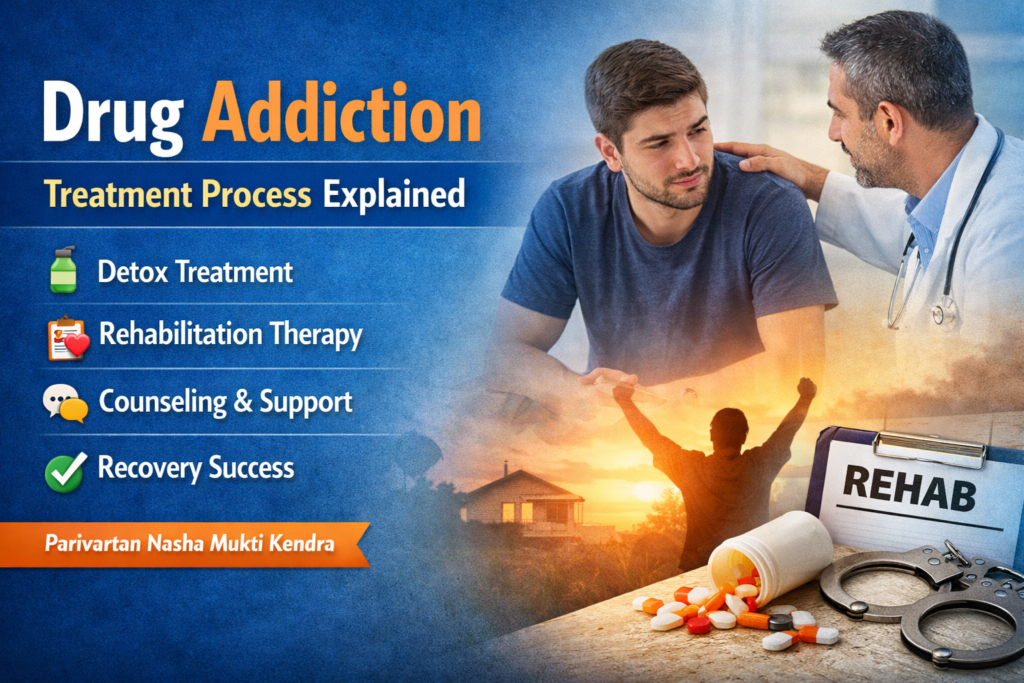
The treatment process includes detox treatment, counseling, rehabilitation therapy, and relapse prevention planning. Each stage supports long-term healing and emotional stability.
Parivartan Nasha Mukti Kendra provides compassionate care and personalized recovery programs that help individuals rebuild their lives with confidence and dignity.
Seeking treatment early can change a person’s future. Recovery begins with one decision and the right support system.
Frequently Asked Questions (FAQ)
What is the first step in drug addiction treatment?
The first step is medical assessment and diagnosis. Doctors evaluate addiction severity, mental health condition, and physical health before creating a treatment plan.
How long does detox treatment take?
Most detox programs last between 7 and 14 days. Duration depends on the type of substance and the patient’s health condition.
What happens during drug rehabilitation?
Patients attend therapy sessions, counseling programs, fitness activities, and behavioral treatment sessions that support long-term recovery.
Can addiction recovery centers prevent relapse?
Yes. Recovery centers teach coping skills, emotional management, and relapse prevention strategies that help patients maintain sobriety.
Why is counseling important during addiction recovery?
Counseling helps patients understand emotional triggers, improve mental health, and build healthy habits that support recovery.
Is family support necessary during recovery?
Yes. Emotional support from family improves motivation, confidence, and long-term treatment success during the recovery process.