Most families picture a Nasha Mukti Kendra as a scary, locked-away place. A patient sits in a bare room. Nobody talks to him. He counts the days until someone lets him out.
That picture is wrong, and it stops a lot of families from calling for help when they need it most.
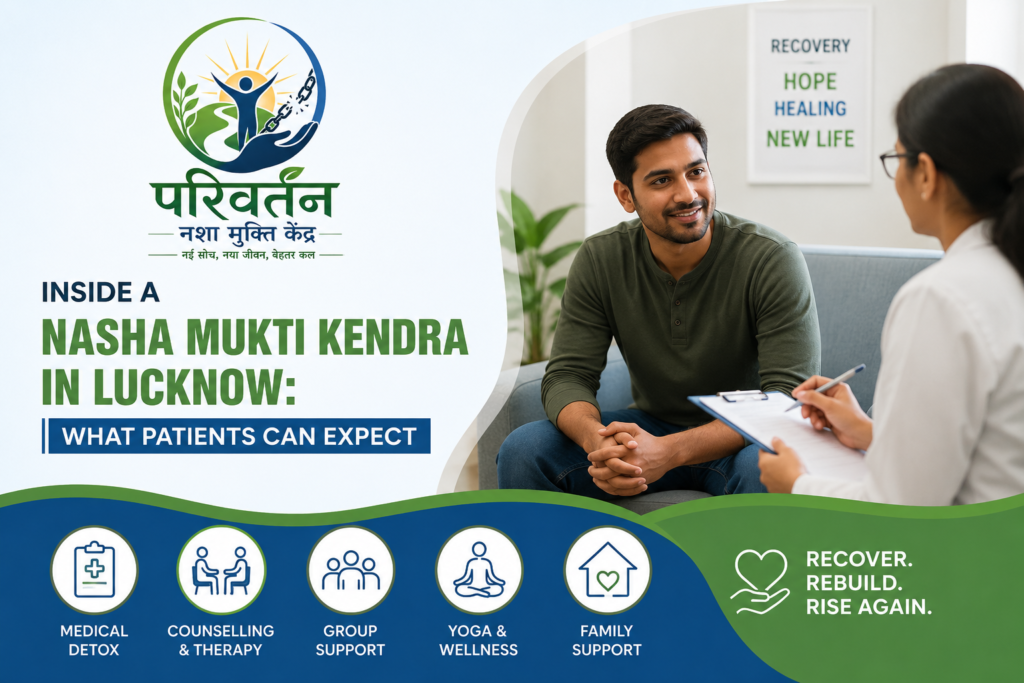
A Nasha Mukti Kendra is not a punishment. It is a structured, medically supervised space where a person gets real help to break free from alcohol or drug addiction. At Parivartan Nasha Mukti Kendra in Lucknow, every day inside the centre has a purpose. This article walks you through exactly what that looks like, from the first phone call to the day a patient walks out ready to rebuild their life.
Key Takeaways
- A Nasha Mukti Kendra offers medical detox, counselling, and family support together, not medicines alone.
- Detox is managed by trained staff to keep withdrawal safe and as comfortable as possible.
- Treatment usually includes daily counselling, group therapy, yoga, and structured routine.
- Programs typically run from a few weeks to a few months, depending on the addiction and the person’s progress.
- Aftercare and follow-up support after discharge lower the chance of relapse significantly.
What Is a Nasha Mukti Kendra?
Nasha Mukti Kendra means “de-addiction center” in Hindi. It is a facility where people struggling with alcohol, drugs, or other substance addiction receive treatment under medical and psychological supervision.
The goal is simple: help the person stop using the substance safely, understand why the addiction started, and build the skills to stay away from it long term.
Who Typically Joins a Nasha Mukti Kendra
Patients come from every background. Some are young professionals who started drinking to manage work stress. Some are older men who have used alcohol for decades and now face liver damage. Some are struggling with prescription drugs, opioids, or other substances. Age, income, and background do not matter here. What matters is that the addiction has started controlling their life, relationships, or health.
Why Families in Lucknow Are Choosing Professional De-Addiction Help
Home remedies, family pressure, and willpower alone rarely work for serious addiction. Withdrawal can be dangerous without medical support, and old habits creep back fast without proper counselling.
Common Myths About Rehab in India
- “It’s like a jail.” In reality, a good center feels more like a supervised hostel with a daily routine.
- “Only ‘hopeless’ cases go there.” Many patients are people who simply want structured support to quit.
- “Medicines alone will fix it.” Medicine helps with withdrawal, but counselling is what prevents relapse.
Signs It’s Time to Seek Help
- Missing work, family events, or responsibilities because of substance use
- Health problems that keep getting worse
- Failed attempts to quit on their own, more than once
- Arguments, trust issues, or safety concerns at home because of the addiction
The Admission Process – Step by Step
Walking into treatment is far simpler than most families expect.
First Call or Enquiry
A family member or the patient calls the centre. This first conversation is confidential. The counsellor asks a few basic questions about the substance used, how long the addiction has been going on, and the person’s current health.
Initial Assessment and Counselling
Before admission, a counsellor and, where needed, a psychiatrist assess the patient’s physical and mental health. This helps the team plan the right detox approach and treatment length for that specific person.
What Documents and Items to Bring
Most centers ask for a basic ID proof, any existing medical reports, and daily-use items like clothes and toiletries. The center usually shares a simple checklist over the phone before the admission day.
Day One Inside the Center: What Really Happens
The first day is mostly about settling in and getting a clear medical picture.
Medical Check-Up and History Taking
A doctor checks vitals, asks about substance history, and notes any existing health conditions. This step decides how the detox will be managed for that patient.
Settling Into the Room and Daily Routine
The patient is shown their room, introduced to the daily schedule, and given time to settle in without pressure.
Meeting the Counsellor and Care Team
A one-on-one session with the assigned counsellor usually happens on day one or two. This is where trust starts building between the patient and the team.
The Detox Phase – What Patients Feel
Detox is the stage where the body clears the substance out of its system. It is also the stage patients and families worry about most.
How Withdrawal Is Managed Safely
Doctors monitor the patient closely during this phase. Medication may be given to reduce discomfort, control cravings, or manage symptoms like anxiety, tremors, or sleep trouble.
Common Concerns Patients Have About Detox
Patients often ask how long it will hurt, whether they will feel sick, and whether staff will actually help if something goes wrong. Being upfront about these worries during the first counselling session usually reduces fear a lot.
Is Detox Painful or Dangerous?
Detox can cause real discomfort, especially for long-term alcohol or opioid use. Done under medical supervision, though, serious risks are managed quickly, and most patients report the hardest days last less than a week.
Daily Life Inside a Nasha Mukti Kendra
Once detox settles down, daily life takes on a clear rhythm.
Daily Schedule and Structure
A typical day includes a fixed wake-up time, meals, therapy sessions, some physical activity, and rest hours. Structure matters here. It replaces the chaos that often comes with active addiction.
Individual Counselling Sessions
One-on-one sessions with a counsellor help the patient understand the root causes behind their addiction, whether that’s stress, trauma, peer pressure, or something else.
Group Therapy and Peer Support
Group sessions let patients hear from others going through the same struggle. This often reduces the shame that keeps people from opening up.
Yoga, Meditation, and Physical Activity
Light exercise, yoga, and meditation help the body and mind heal together. These sessions also give patients a healthy outlet instead of old habits.
Role of Family During Treatment
Recovery works better when family is involved, not shut out.
Family Counselling Sessions
Separate sessions help family members understand addiction as a health condition, not a character flaw. This changes how they support the patient once they’re home.
How Often Families Can Visit or Talk
Most centres allow scheduled calls or visits, especially after the initial detox phase settles. Exact timing depends on the patient’s condition and the centre’s policy.
Supporting a Loved One Without Enabling
Families learn the difference between helping and enabling. This includes setting healthy boundaries, avoiding guilt-driven decisions, and encouraging accountability instead of covering up mistakes.
How Long Does Treatment Usually Take?
Treatment length depends entirely on the person and their addiction history.
Short-Term vs Long-Term Programs
Short-term programs often run around 3 to 4 weeks and focus on detox plus initial counselling. Long-term programs can run several months and dig deeper into behaviour change and relapse prevention.
Factors That Affect Recovery Time
- Type and severity of the addiction
- Any existing mental health conditions
- How the patient responds to detox and therapy
- Support available at home after discharge
Life After Discharge – Aftercare and Relapse Prevention
Treatment doesn’t end the day a patient walks out the gate.
Follow-Up Counselling
Regular follow-up sessions, in person or by phone, help patients stay accountable and talk through new challenges before they turn into a relapse.
Support Groups and Sober Community
Groups like Alcoholics Anonymous or Narcotics Anonymous give patients an ongoing community of people who understand exactly what they’re going through.
Warning Signs of Relapse
Sudden mood changes, avoiding family, skipping follow-up appointments, or making excuses to visit old environments are all signs that need quick attention.
What Makes Parivartan Nasha Mukti Kendra Different
Qualified Staff and Approach
Treatment at Parivartan is guided by trained counsellors and medical staff who focus on both the physical and emotional side of addiction, not just detox alone.
Facilities and Environment
The centre is designed to feel calm and supportive rather than clinical, with space for therapy, rest, and daily activity that helps patients feel human again, not just treated.
Frequently Asked Questions
What is the full form or meaning of Nasha Mukti Kendra?
Nasha Mukti Kendra is a Hindi term meaning “de-addiction center,” a facility that helps people recover from alcohol or drug addiction through medical and psychological treatment.
How much does treatment cost at a Nasha Mukti Kendra in Lucknow?
Cost depends on the length of stay, type of treatment needed, and facilities chosen. It’s best to call the centre directly for an accurate estimate based on your specific situation.
Can family members visit during treatment?
Yes, most centres allow scheduled visits or calls, usually once the initial detox phase is stable. Timing depends on the patient’s condition.
Is admission to a de-addiction centre voluntary or forced?
Both situations happen. Voluntary admission tends to work better long term, but many centres also guide families on how to encourage a reluctant loved one to agree to treatment.
What happens if a patient relapses after treatment?
Relapse doesn’t mean treatment failed. Centres usually offer follow-up support, and patients can return for additional counselling or a refresher program if needed.
Are Nasha Mukti Kendras regulated by the government?
Yes, de-addiction centres in India fall under guidelines set by the Ministry of Social Justice and Empowerment, which cover patient care standards and facility requirements.
How do I convince a family member to join a rehab centre?
Approach the conversation with concern, not blame. Many centres offer a free initial consultation call where a counsellor can guide you on how to bring up the topic gently and effectively.